
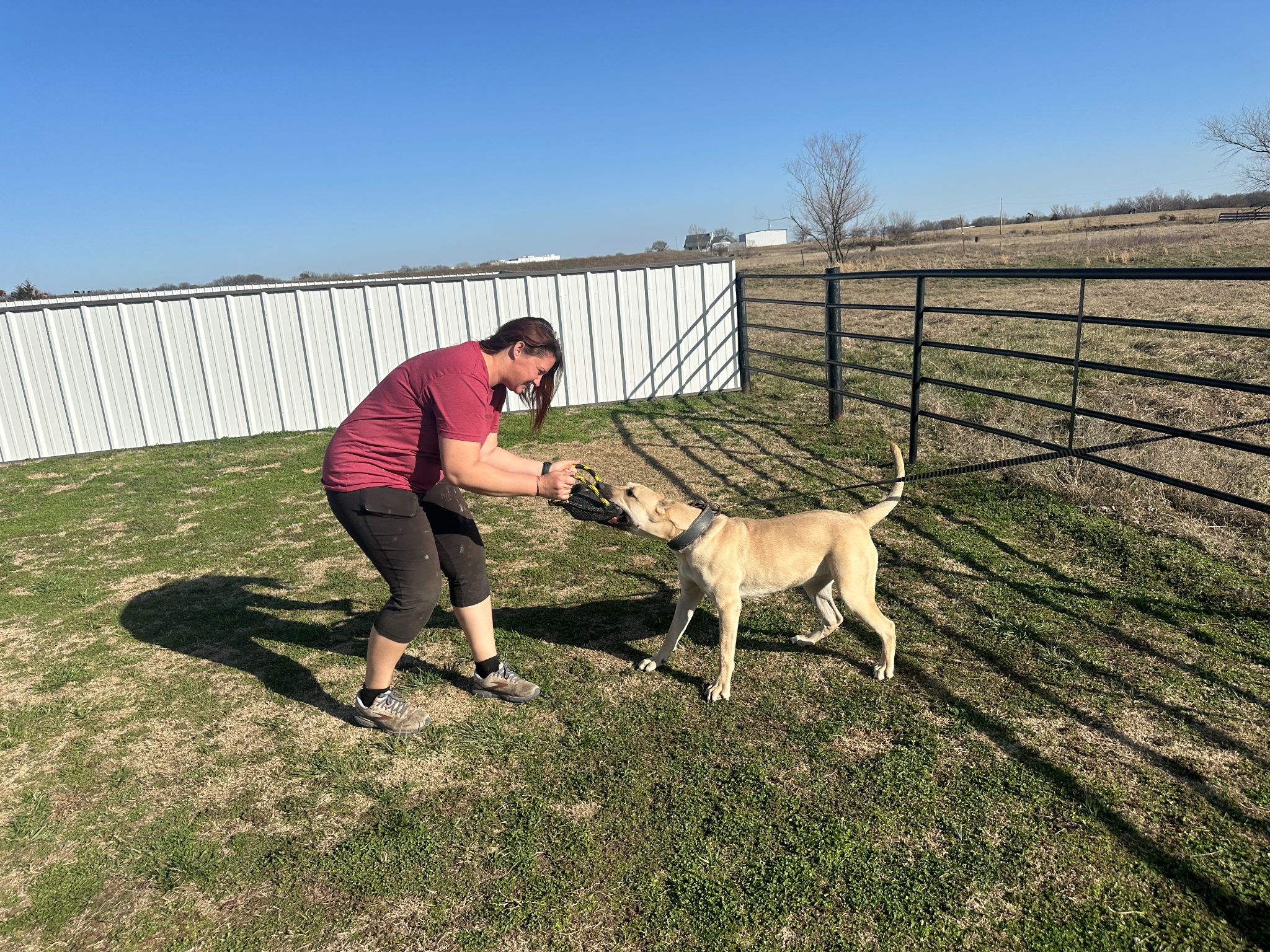
Are you getting frustrated with your dog’s behavior? Whether it’s jumping on guests, pulling on the leash, barking at every passerby, or simply ignoring you, these are learned habits, and learned habits can change. The key is a clear plan that everyone in your home follows. From the dog training experts at Canine Unlimited of Tulsa, here is a step-by-step approach to re-training your dog, plus guidance on when it’s time to call a professional.
Step 1: Assess the Behavior
Rule Out Medical Causes First
Before changing your training, schedule a vet visit, especially if the behavior appeared suddenly. The Merck Veterinary Manual calls pain “an important risk factor for behavior problems,” noting that it can lower a dog’s threshold for fear and aggression. The ASPCA advises owners of aggressive dogs to see a veterinarian “before you do anything else, to rule out medical issues that could cause or worsen” the behavior.
Track the ABCs
Next, spend a week taking notes. Record the antecedent (what happened right before), the behavior itself, and the consequence (what happened right after). Veterinary behaviorists use this same antecedent-behavior-consequence framework to identify triggers. You may find that the doorbell sets off the barking, or that jumping earns attention every time.
Step 2: Set Specific, Measurable Goals
“Be good” isn’t a goal your dog can understand. Define what you want instead, such as “sit at the front door while guests come in” or “walk on a loose leash to the end of the block.” Focus on one or two behaviors at a time and break each into small steps.
Meanwhile, use gates, leashes, or crates to keep your dog from practicing the old habit. Every repetition reinforces unwanted behavior.
Step 3: Use Consistent Commands
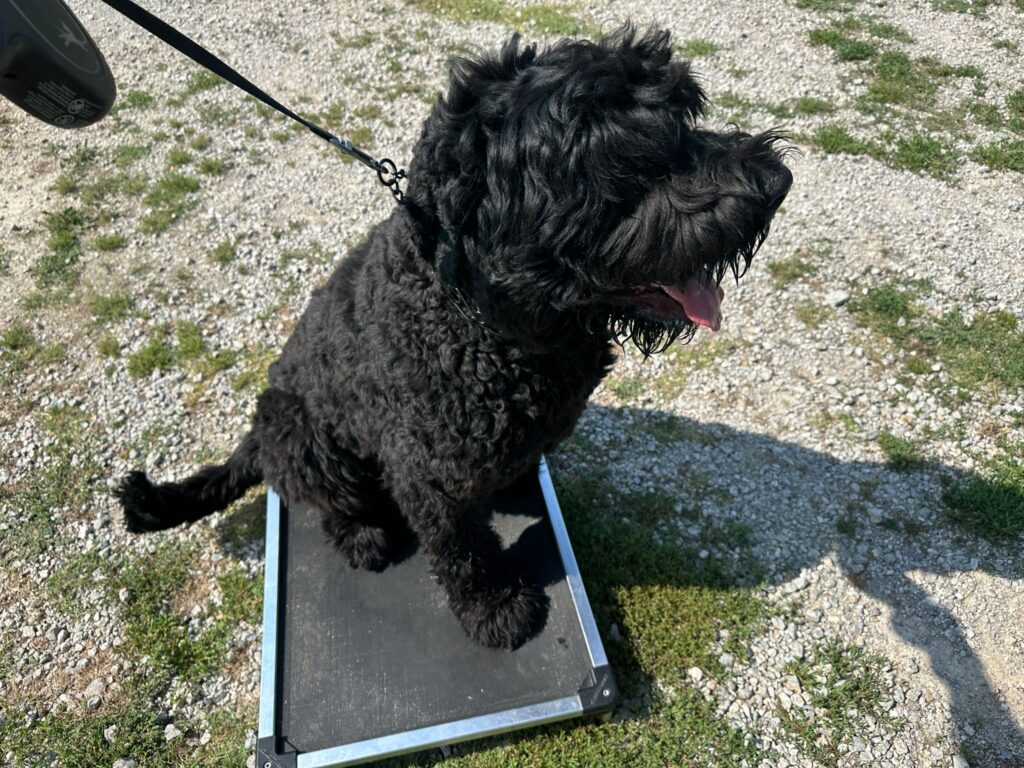
As one trainer quoted by the American Kennel Club puts it, “a word can only have one meaning for a dog,” so if one person says “down” to mean “lie down” and another uses it to mean “get off the couch,” your dog can’t tell what you want. The American Kennel Club recommends that families sit down together and agree on one plan.
Choose one word and one hand signal for each behavior, and apply the same house rules for everyone. If jumping is off-limits, nobody allows it “just this once.”
Step 4: Reward the Behavior You Want
Positive reinforcement teaches your dog what to do, not just what to stop doing.
Timing matters, too. Humane World for Animals advises that the reward “must occur immediately (within seconds)” of the good choice, or your dog may not associate it with the proper action. A marker word like “Yes!” pinpoints the exact moment. For rewards, use whatever your dog values most, whether that’s a treat, a toy, or praise.
Step 5: Practice Patience
Many owners see early improvement within a few weeks of daily practice, but deeply ingrained habits can take months to change. Expect occasional setbacks, especially in new places or around bigger distractions.
When a behavior that used to work suddenly stops paying off, many dogs try harder before giving up. Trainers call this an extinction burst. If your dog barks louder or jumps higher for a few days, hold steady. Giving in teaches your dog that persistence will allow them to return to old habits.
Build a Structured Daily Routine
Dogs feel more secure when they know what to expect. Keep meals, walks, potty breaks, and rest at predictable times, and fit short training sessions throughout the day. Five minutes per session should be enough for at-home training, since anything longer risks a bored or frustrated dog. Ending on a success keeps your dog eager for the next round.
Structure is also central to how our trainers approach behavior change. Our dog behavior training programs coach owners through clear routines, handling skills, and daily structure that supports long-term success.
When to Seek Professional Guidance
Some problems aren’t safe to tackle alone. Reach out for help if your dog:
- Has bitten or shown aggression toward people or pets
- Guards food, toys, or spaces by growling, snapping, or stiffening
- Shows severe anxiety or fear
- Hasn’t improved after several weeks of consistent work
For aggression or severe anxiety, keep your veterinarian involved, since some dogs need medical support alongside training. If your dog’s foundation needs work, dog obedience training builds reliable sit, down, stay, place, and recall skills that make behavior work easier.
Get Expert Help Re-Training Your Dog
Re-training takes time, consistency, and a clear plan, but you don’t have to do it alone. Canine Unlimited works with dogs and owners across the Tulsa area and Northeast Oklahoma through private lessons and board-and-train programs. Contact our team to talk through your dog’s behavior and find the right path forward.