
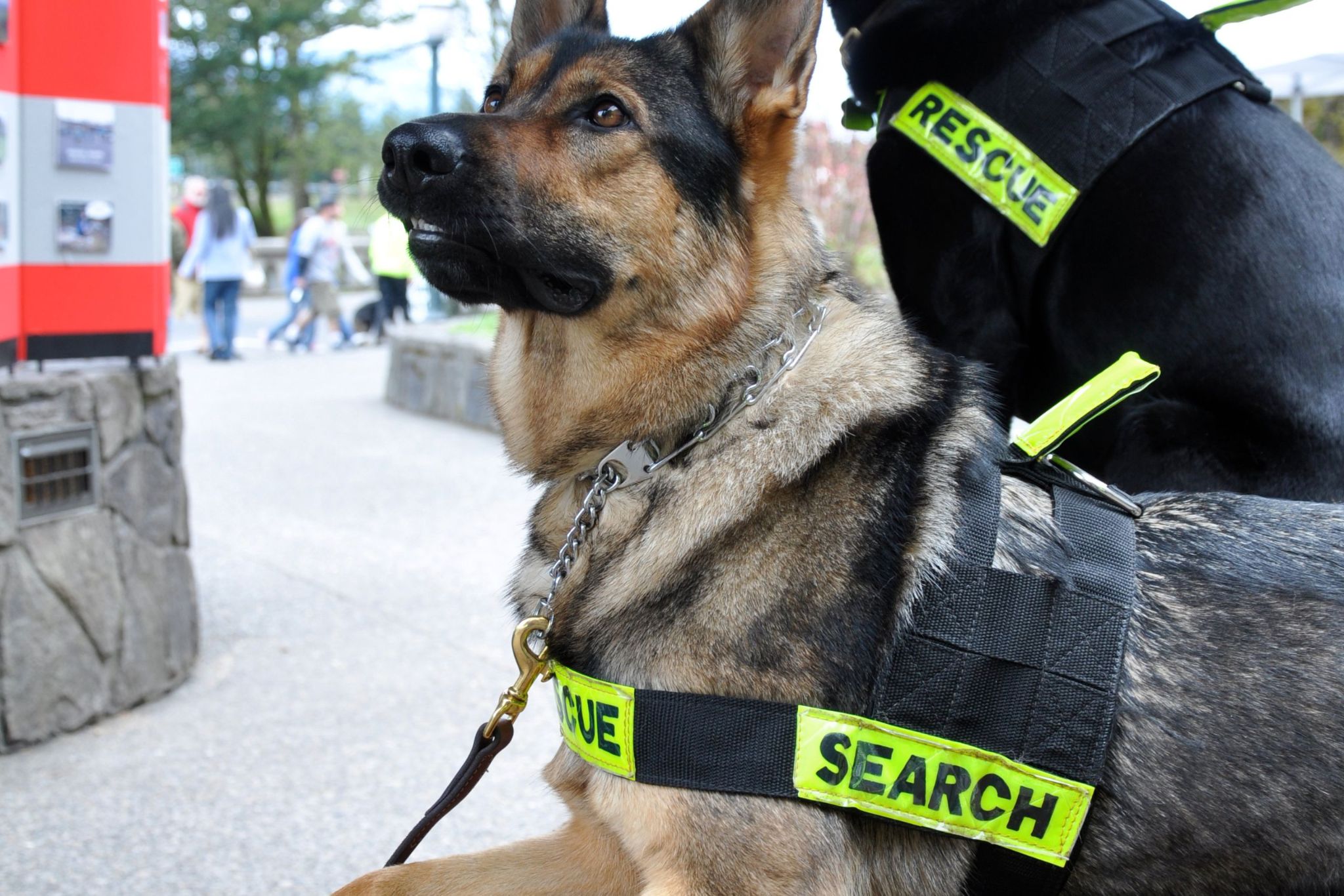
Throughout history, the bond between humans and canines has shifted from basic utility to a sophisticated, life-saving partnership. We see this evolution every day through advanced search and rescue training, where a dog’s primal instincts are refined into professional precision. The story of the Search and Rescue (SAR) dog is one of transformation, taking the natural drives of working breeds and channeling them into hope.
The Alpine Pioneers: The St. Bernard Legacy
The formal history of SAR dogs traces back to the 1700s at the Great St. Bernard Hospice in the Swiss Alps. Monks at the hospice began keeping large, mountain-dwelling dogs, descendants of Mastiff-style breeds, to guard the grounds. However, the monks soon realized these dogs possessed an ability to navigate deep snow and find travelers buried by avalanches.
Unlike modern dogs that work on command, these early SAR dogs worked in small packs without human handlers. They would locate a victim, dig them out, and huddle over them to provide warmth. If the victim couldn’t move, one dog would return to the hospice to lead the monks back to the site. This era established the foundational truth of SAR, that a dog’s nose can perceive what human technology cannot.
From Trenches to Rubble: The World Wars
The 20th century moved SAR dogs from snowy mountains to the battlefield. During World War I and World War II, “Mercy Dogs” (or Red Cross dogs) were trained to find wounded soldiers in No Man’s Land. They were taught to distinguish between the smell of a living soldier and the deceased, bringing back a piece of the soldier’s clothing to notify handlers.
By the time the London Blitz occurred in WWII, the focus shifted to “Casualty Dogs.” These canines were the first to be trained specifically to find people trapped under collapsed buildings and urban debris. They would bring medical supplies, or if the soldier was too injured, would stay and offer comfort. This was a pivotal milestone; it proved that dogs could navigate unstable environments and high-stress urban landscapes, skills that remain central to search and rescue training today.
Oklahoma’s Place in SAR History
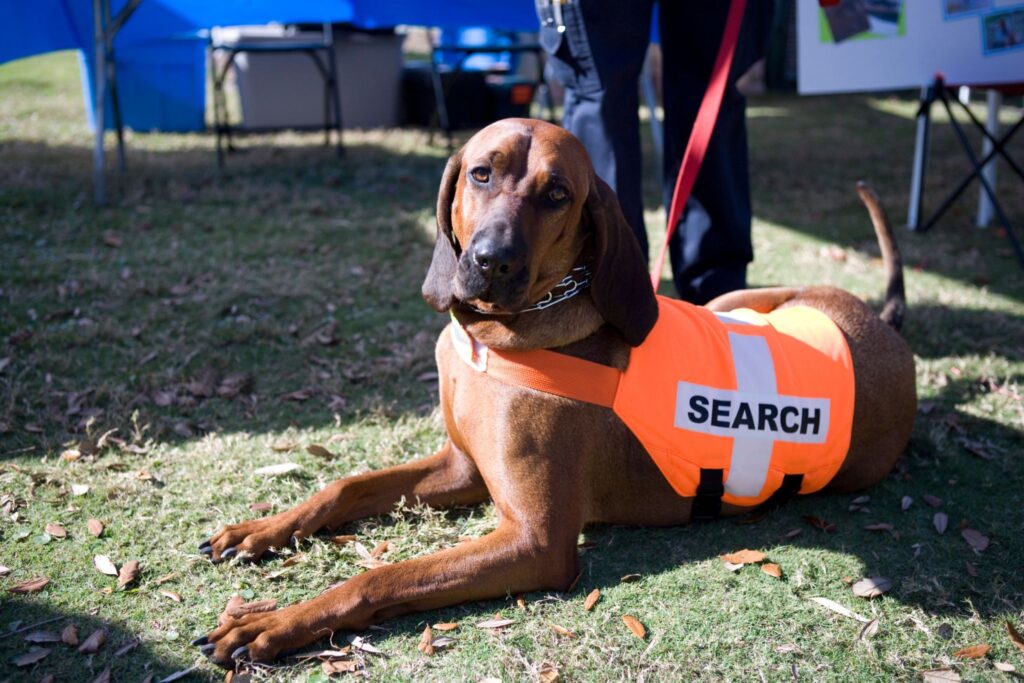
For many in the United States, the true power and necessity of SAR dogs became heartbreakingly clear on April 19, 1995. Following the Oklahoma City bombing of the Alfred P. Murrah Federal Building, over 70 SAR dogs were deployed from across the country to assist in the recovery efforts.
These dogs worked tirelessly through the debris, their handlers often noting the immense emotional toll the work took on the animals. This event, along with the subsequent response to the 1999 Bridge Creek–Moore tornado, solidified Oklahoma as a region that understands the vital importance of disaster preparedness. Today, search and rescue organizations in the Tulsa area and throughout the state continue to honor that legacy by maintaining some of the most rigorous training standards in the country.
Modern Milestones: The Shift to Specialization
In the decades since the 90s, SAR has moved from a general skill to a highly specialized discipline. Today’s working dogs are generally categorized into three main roles:
- Air Scenting: These dogs work off-lead, catching “rafts” of human scent floating in the air. They don’t need a starting point or a piece of clothing; they simply scan an area for any human presence.
- Trailing/Tracking: These specialists follow the specific scent trail of a single individual, often following footsteps across various terrains.
- Disaster/Human Remains Detection (HRD): These dogs are trained to find people in collapsed structures (like after an earthquake) or to locate remains to bring closure to families.
Developing the Life-Saver: The Training Process
A SAR dog is built, not just born that way. While breeds like German Shepherds, Labradors, and Belgian Malinois are common due to their high “drive,” the training is what separates a pet from a partner.
The Foundation of Play
It may look like a game, but modern SAR training is rooted in the “reward drive.” A dog learns that finding a human leads to their favorite toy or a high-value treat. Over months and years, this “hide-and-seek” game is made progressively more difficult, adding distractions, inclement weather, and complex terrain.
Agility and Nerve Strength
A SAR dog must be fearless. They are trained to walk across moving rubble, climb ladders, and be lowered from helicopters. Training centers, including those focusing on search and rescue training, utilize specialized “rubble piles” to mimic real-world disaster sites, ensuring the dog remains focused on the scent even when the ground beneath them is unstable.
The Partnered Future
The bond between handler and dog remains the most effective tool in a rescuer’s kit. Even with the advent of heat-seeking drones and sensitive seismic sensors, nothing can match the speed, mobility, and accuracy of a highly trained dog’s nose.
Canine Unlimited honors the history of these incredible animals by advocating for the highest standards of preparation. These dogs stand ready to serve, the ultimate testament to the idea that a dog is not just a human’s best friend, but their greatest ally.
We’re proud to support volunteer teams, first responders, and community organizations throughout Oklahoma. Reach out to learn more about our dog SAR training courses today!